
06 October 2026
Dry pasta production: drying techniques, common problems and yield
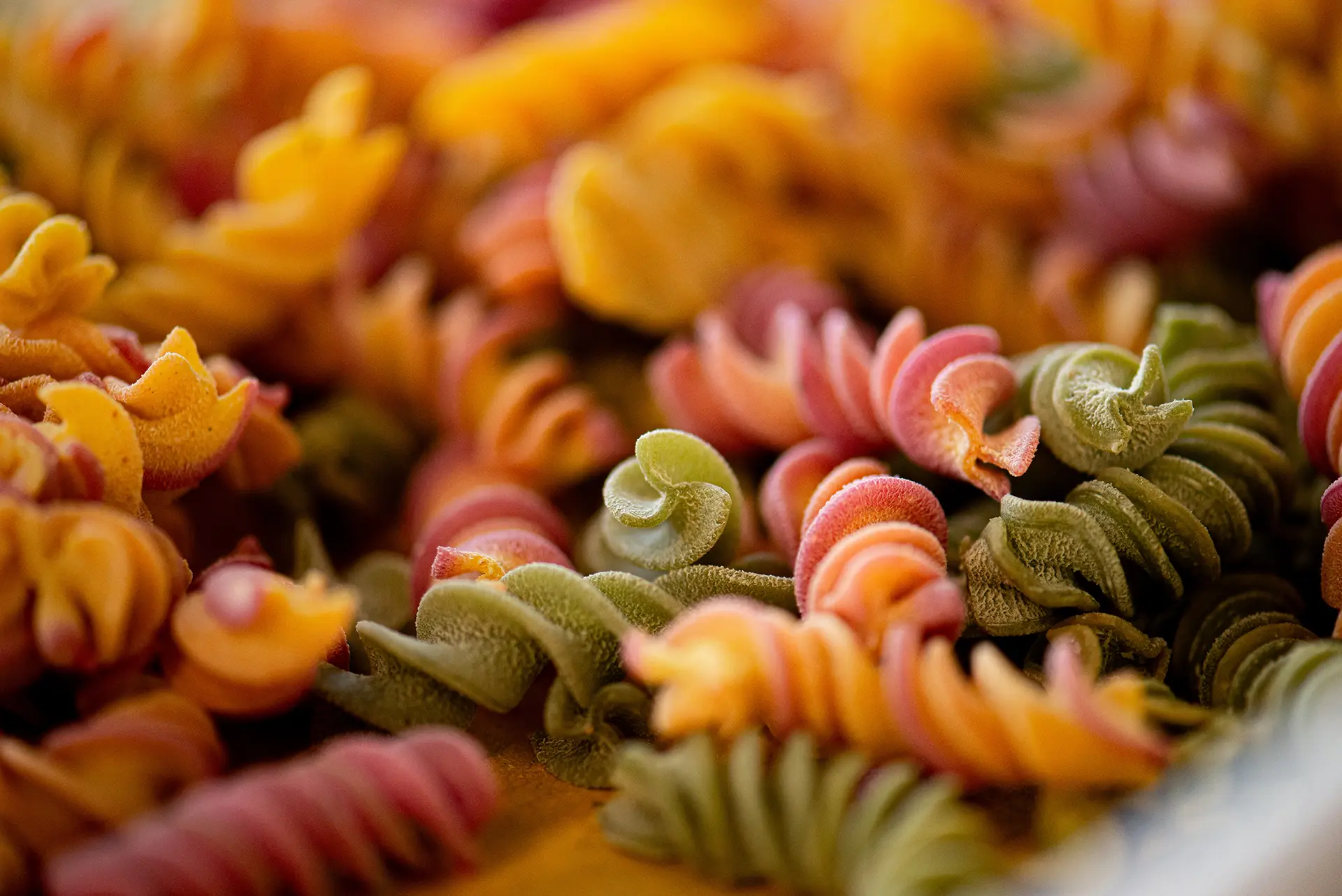
Does producing dry pasta simply mean removing water from fresh pasta?
Technically, yes. But for a professional pasta maker, drying is a much more complex process.
Temperature, humidity, airflow and time must be carefully balanced and adapted to the product. Incorrect process management can compromise the final result during the very last stages of a production process that began many hours earlier.
This is why learning how to produce dry pasta professionally involves more than following a sequence of operations. It means understanding and controlling the process, recognizing potential problems and evaluating their economic consequences.
How to produce dry pasta: from fresh pasta to the finished product
Professional dry pasta production begins with an understanding of raw ingredients and dough preparation. It then continues through pasta shaping and drying, ultimately resulting in a stable product suitable for storage.
The drying stage involves several variables acting simultaneously. Water must be gradually removed from the pasta under controlled conditions.
There is no single start button that automatically transforms fresh pasta into high-quality dry pasta.
Pasta shape, thickness, dough composition and product characteristics all influence the process and require an appropriate drying program.

The pasta drying process: key variables to control
Sleep on it… but only with the right drying program
A pasta drying cycle can last many hours. However, setting up a pasta dryer and waiting for the program to finish does not necessarily mean that the selected program is suitable for that particular pasta.
This is where professional training and experience make the difference.
Understanding what happens to the product during drying allows pasta makers to recognize defects and identify the process variables responsible for them.
For this reason, Primo Piatto’s training courses go beyond theoretical explanations. The school is equipped with professional pasta production and drying machinery, including Drymini, an ITALGI pasta dryer used to teach drying techniques in a practical, controlled environment.
Heat and cold-telated drying defects: when pasta reveals its problems
Pasta that appears perfect when it comes out of the dryer may still reveal unexpected defects.
Among the problems professional pasta makers need to recognize are the defects known in Italian as bottature, which can develop in relation to the conditions experienced by the product during and after the drying process.
Understanding why these defects occur requires looking beyond temperature alone.
It means considering the interaction between temperature and humidity and how both variables change over time.
As Danilo Curotto – MisterPasta® explains, pasta drying is, in some ways, similar to freezing.
Reaching the desired final condition is not enough. What matters is how the product gets there and how it is subsequently handled.
Understanding these phenomena is what allows a pasta maker to move beyond simply operating a machine and develop genuine control over the drying process.
Don’t open that door!
During pasta drying, even a seemingly harmless action can alter the conditions established inside the dryer.
Opening the door to “take a quick look” exposes the controlled environment to external conditions, changing temperature and humidity while the drying program is working to regulate them.
This simple example illustrates a much broader principle: in professional pasta production, knowing what not to do is just as important as knowing the correct procedure.
It is also one of the reasons why practical drying exercises are so valuable. They help explain phenomena that cannot easily be understood through recipes or tables of drying times and temperatures alone.
Did you know that drying reduces pasta yield?
There is another important aspect of pasta drying that is less obvious but essential for anyone producing pasta for sale.
During drying, pasta loses water and, consequently, weight. The weight of the finished dry pasta is therefore lower than the weight of the fresh pasta initially loaded into the dryer.
From a production perspective, this is exactly the intended result.
From a business perspective, however, it means that the pasta maker needs to understand the actual yield of the drying process.
This is where technical expertise and business management begin to overlap.
How much saleable finished product can be obtained from a given quantity of raw ingredients? How much do energy consumption, production time, labor, packaging and waste contribute to the overall cost? What selling price is needed to make production financially sustainable?
Understanding the food cost and overall production costs of dry pasta helps prevent one of the most common mistakes made by new pasta businesses: knowing how much the ingredients cost without knowing the actual cost of producing and selling one kilogram of finished pasta.
You can explore this topic further in our guide to fresh pasta food cost and profitability.

Producing great pasta is not enough: you also need to sell It
A technically well-made pasta product does not automatically become competitive in the market.
Once the production process, yield and actual costs are understood, one essential question remains: why should customers choose that particular pasta?
Pasta shape, raw ingredients, production methods, packaging, brand identity, target market and pricing all contribute to the product’s perceived value.
Pasta marketing therefore begins with the product itself. It means understanding what makes it different, identifying the right customers and communicating its characteristics in a way that is meaningful and appealing to potential buyers.
Competing solely on price is rarely the only possible strategy, particularly for small-scale pasta producers.
Specialization and product differentiation can instead help a business establish its identity and find a distinct position in the market.
Learning to produce dry pasta means learning to manage the entire product
This is the approach behind Primo Piatto – Professional Pasta School.
Training is not just about learning how to make pasta. It is about understanding what happens to the product throughout the production process and how to turn technical expertise into a professional business.
Primo Piatto’s pasta-making courses combine theory and hands-on experience in a training facility equipped like a professional pasta factory.
Participants work with professional machinery while exploring production, preservation, business management and food cost.
Because there is an important difference between simply making dry pasta and producing it professionally.
And that difference is worth learning.